Measure the usable area
Measure clear floor length and width after moving furniture. Then check overhead clearance, doors, windows and walkways. A folded mat or compact weight set may store easily but still need more room during use. Read each manufacturer’s recommended clearance.
Keep the first setup simple
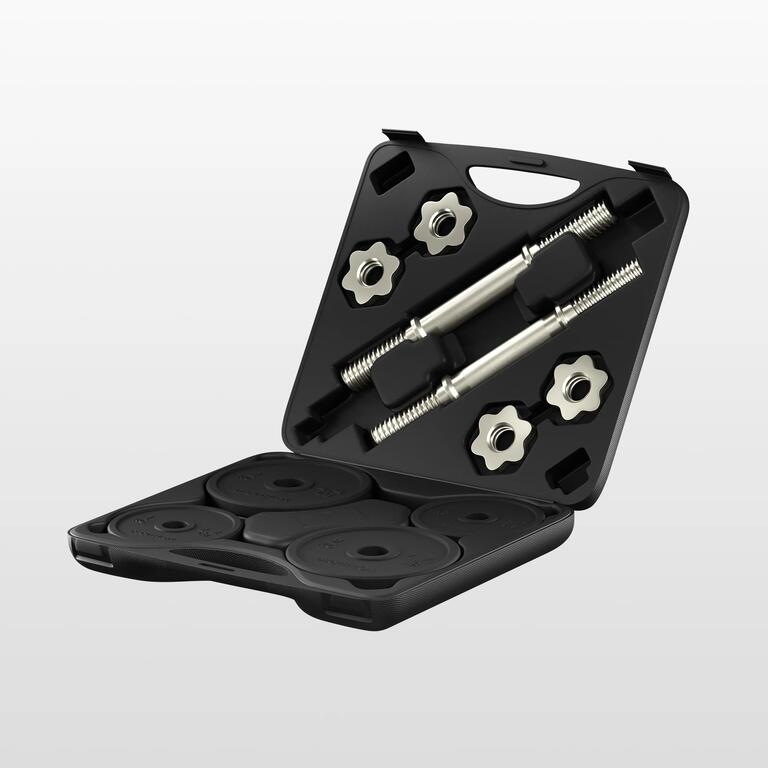
Consider a comfortable exercise mat and one form of resistance you know how to use, such as bands or a suitable dumbbell set. Choose items for a defined training plan rather than buying a machine because it is on offer. A bench or cardio machine can wait until the need is clear.
Plan for floors and neighbours
Consider noise, flooring protection and secure storage. A mat does not prove a floor can support heavy equipment, and rubber flooring does not make dropping weights appropriate in an apartment. Ask your building manager or a qualified professional about structural concerns.
Make storage part of the design
Store weights low and securely, away from children, pets and walkways. Keep bands away from damage and follow care instructions. A corner you can set up and put away easily is more useful than a crowded room that makes every session inconvenient.
Take this with you
Your checklist
- Measure movement and storage space separately
- Check ceiling height and manufacturer clearance
- Choose one resistance option before expanding
- Keep equipment secure between sessions
This guide does not provide an individual exercise programme, certify equipment or replace manufacturer instructions. For personal training needs, seek qualified guidance.