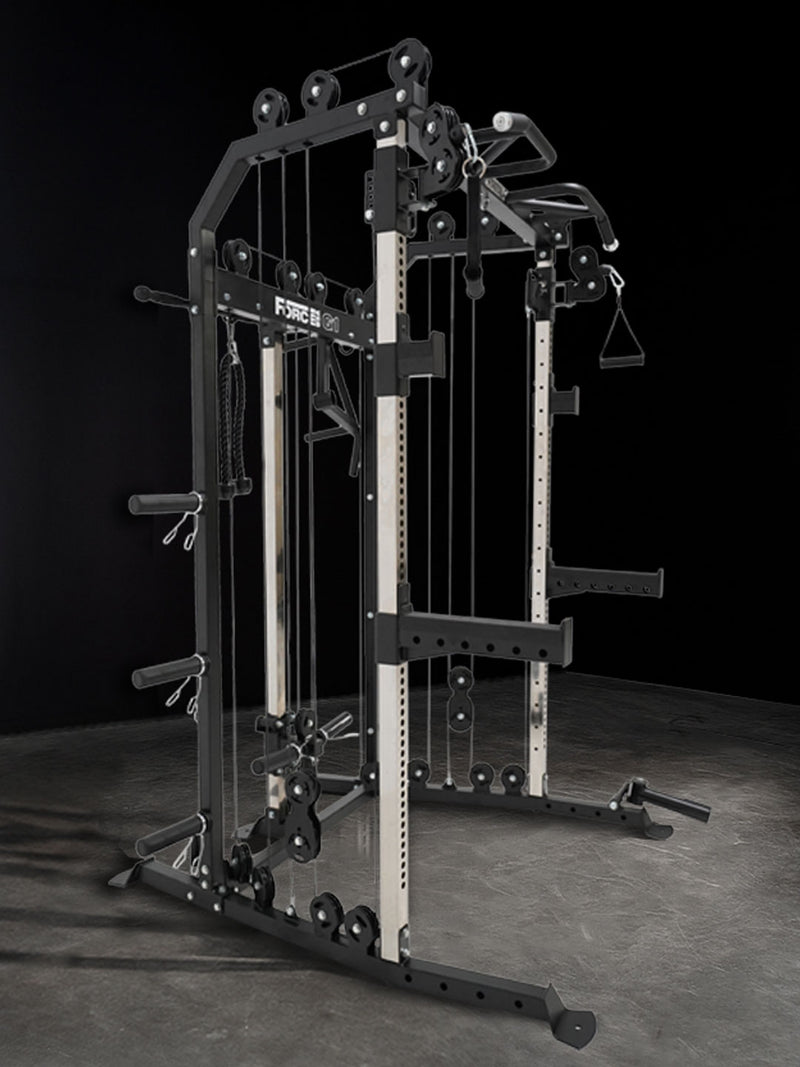
Equipment formats at a glance
| Formats to compare | Plate-loaded combinations, selector-stack systems and modular configurations |
|---|---|
| Suitable planning brief | A dedicated home gym or studio where the included functions match the plan. |
| Working space | Measure the entire operating envelope, attachments and ceiling. |
| Main trade-off | One frame consolidates equipment, but shared stations can limit how many people train at once. |
Count useful stations, not advertised exercises
A long exercise count may describe multiple movements using the same station. Separate the rack, adjustable pulleys, Smith bar, pulldown, row and optional attachments. Ask which functions can be used independently and which require the same cable, bench or working area. This matters when more than one person trains.
Price the configuration you can actually use
List plates, barbell, bench, handles, installation and optional stations separately. The Force USA G1 and G20 illustrate why the model list matters: one is a plate-loaded rack/cable combination, while the G20 adds a Smith system and stacks. Their product pages provide model-specific specifications; the family label alone does not.
Specifications to compare before buying
Included versus optional parts, pulley ratios, simultaneous users and commercial-use terms.
Record the exact model code and whether the stated dimensions describe storage, the base or the full operating area. Keep the manufacturer’s units and load definitions beside the value, and leave missing fields marked as not confirmed.
A common buying mistake
Comparing a basic frame with another system that includes stacks, accessories and installation as though both quotes cover the same setup.
Brands and catalogue routes
These are catalogue starting points for this equipment family, not a ranking or a local-stock claim.
Questions people ask
Is all-in-one equipment suitable for a professional gym?
Some models may be, but the name does not establish commercial duty or warranty coverage. Confirm intended use, simultaneous users and service support in writing.
Sources and research notes
Official catalogue or programme references support the named examples. The selection framework and planning questions are GymKart editorial analysis. Published specifications, access, dates and inclusions must be confirmed for the exact product or booking. No hands-on product test or site inspection is claimed.